

The basic principles and applications of the Eight Trigrams
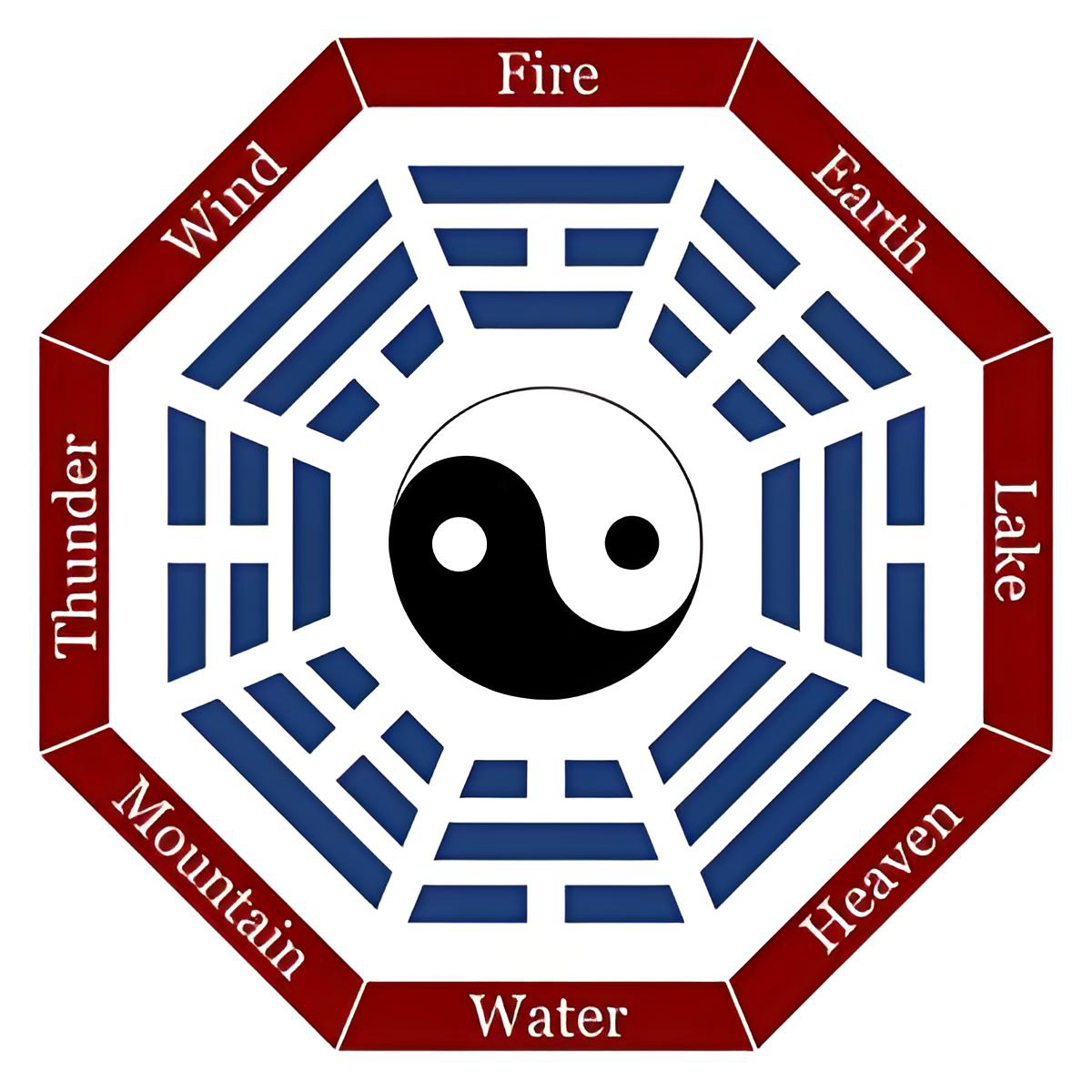
The Eight Trigrams (Bagua) are an important component of the I Ching (Book of Changes).They consist of eight basic symbols,
each composed of three yin-yang lines. These symbols not only represent fundamental elements of nature but also symbolize various aspects of human life. The composition of the Eight Trigrams reflects the harmony and change of the universe, revealing the intrinsic connections between things. Each trigram has its unique meaning, forming a language for interpreting the world.
Among the Eight Trigrams, the eight basic trigrams—Qian, Kun, Zhen, Xun, Kan, Li, Gen, and Dui—each symbolize different natural phenomena and human activities. For example, Qian represents Heaven, symbolizing creation and powerful force, while Kun represents Earth, symbolizing inclusiveness and gentleness. Other trigrams, such as Zhen representing thunder and lightning and Xun representing wind, each have their unique symbolic meanings, providing a foundation for understanding and analyzing our surroundings.
The Eight Trigrams of the I Ching are not merely abstract symbols; they are also widely used in physiognomy and fortune-telling. In practical application, diviners can analyze individual destinies and trends by interpreting the trigrams and their combinations. For example, when someone consults about the success of their career development, I Ching analysis can reveal potential difficulties and opportunities, helping them make informed decisions. Furthermore, through the method of determining the hexagram, specific answers can be derived for particular questions, providing guidance for life.
In general, the Eight Trigrams, as an ancient philosophical and predictive tool, possess profound cultural connotations and practical value. Its application in physiognomy and divination demonstrates the wisdom of traditional Chinese culture.


About author


Add comment