
No products in the cart.
Return To Shop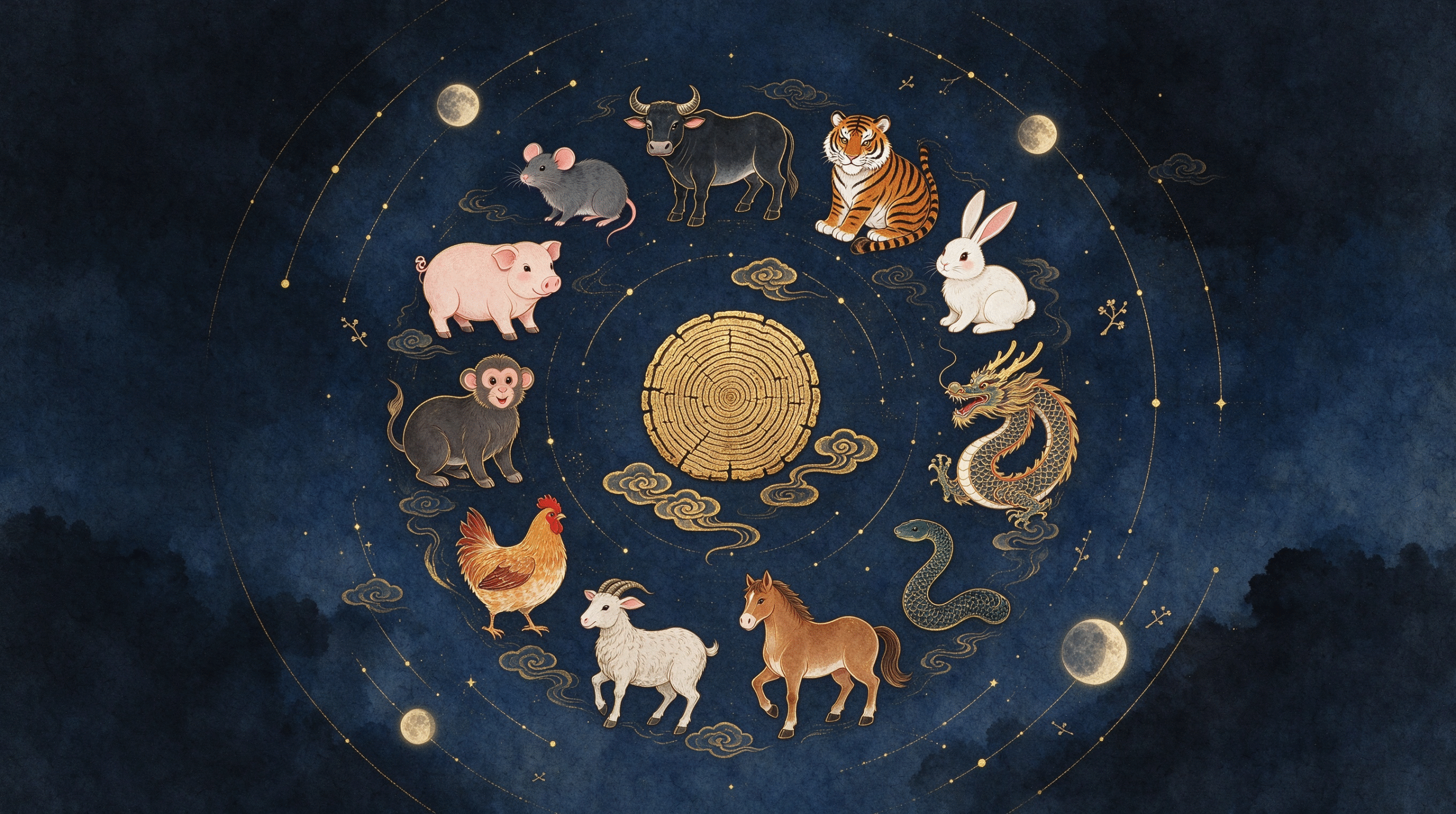
Why Is There No Cat in the Chinese Zodiac? Legend, History & Why Vietnam Has One
If you’ve ever wondered why there is no cat in the Chinese zodiac, you’re not alone. Cats are everywhere today — in ancient stories, paintings, popular culture, and millions of homes around the world — yet they are missing from the famous twelve-animal cycle.
The traditional twelve animals include the rat, ox, tiger, rabbit, dragon, snake, horse, goat, monkey, rooster, dog, and pig — no cat in sight.
It seems strange that an animal as familiar and beloved as the cat would be left out. But according to one of China’s best-known folk tales, a clever rat may be responsible.
And there is another surprising detail: while China has a rabbit in its zodiac, Vietnam has a cat.
The story behind this difference reveals how folklore, language, and cultural traditions can shape the way people understand the world.
What Is the Chinese Zodiac & Its 12 Animal Signs?
The Chinese zodiac, known as Sheng Xiao (生肖), is a traditional twelve-year cycle in which each year is represented by an animal.
The twelve animals appear in a fixed order:
- Rat
- Ox
- Tiger
- Rabbit
- Dragon
- Snake
- Horse
- Goat
- Monkey
- Rooster
- Dog
- Pig
Each animal has its own place in Chinese cultural traditions. Some are associated with good fortune, while others are linked to qualities such as strength, intelligence, loyalty, or patience.
The zodiac is commonly discussed during Lunar New Year, when people celebrate the beginning of a new lunar year and reflect on the animal associated with it. Many people also enjoy reading about traditional zodiac personality traits. These interpretations are part of cultural belief and folklore rather than scientifically established descriptions of personality.
These twelve animals are among the most recognizable good luck symbols in Chinese culture.
But if there are twelve animals, why did the cat never make the list? One popular legend offers an entertaining explanation.
The Legend of the Rat and Cat:
Why the Rat Tricked the Cat Out of the Zodiac
According to a famous Chinese folk tale, the Jade Emperor wanted to choose twelve animals to represent the years. To determine their order, he announced a great race: the first twelve animals to reach the finish line would earn a place in the zodiac, and their finishing order would set the sequence of the cycle.
In the most beloved version of the story, the rat and the cat were best friends. Knowing the cat loved to sleep late and might miss the start, the cat asked the rat to wake him up on the day of the race. The rat readily agreed.
However, when the important morning arrived, the rat was so excited about the race that he forgot all about his promise. He left bright and early without waking the cat, who overslept and missed his chance to join the competition entirely.
Meanwhile, the rat hatched a clever plan to win the race. The finish line lay beyond a wide river, and the rat knew he could not swim across on his own. He spotted the strong, diligent ox heading for the water, and offered to sing encouraging songs to guide him across — if the ox would let him climb on his back.
The ox agreed, and the rat scampered up onto his shoulder. As they crossed the river, the rat sang to keep the ox motivated. But just as the ox reached the opposite bank and neared the finish line, the rat jumped forward off his shoulder and landed first, sneaking ahead to win the race.
That is why the rat is the first animal in the Chinese zodiac, and the ox comes second. The tiger, rabbit, dragon, snake, horse, goat, monkey, rooster, dog, and pig followed in order.
And the cat? When he finally woke up and realized he had missed the race entirely, he was furious with the rat for breaking his promise. To this day, the legend says, cats chase rats whenever they see them — still holding a grudge over that ancient betrayal.
Of course, this is a folktale rather than a documented historical event. Its purpose is to entertain and explain a familiar feature of the zodiac through an imaginative story.
The Real Reason Why There Is No Cat in the Chinese Zodiac (Beyond the Legend)
There is no historical evidence that a rat deliberately prevented a cat from joining the Chinese zodiac. The tale belongs to Chinese folklore, where animals often behave like people, forming friendships, competing for rewards, and making decisions that reveal their character.
In this story, the rat represents cleverness and resourcefulness — even if his actions feel selfish. The cat represents a trusting friend who pays the price for relying on someone else’s promise. That ambiguity is part of what makes the story memorable for generations.
But if the legend is not true, why is there really no cat in the zodiac?
The answer lies in history. The twelve-animal zodiac system took shape in China around the Han Dynasty, over two thousand years ago. At that time, domestic cats as we know them today were not yet widespread across central China. The word “cat” in ancient texts mostly referred to wild cats, not the common household pet. Since cats were not yet a familiar part of daily life for most people, they never earned a place in the twelve zodiac animals.
The legend does not need to be historically true to be culturally significant. Like many folktales, it helps people remember a tradition by turning it into a story with characters, conflict, and an unexpected outcome.
Why Does the Vietnamese Zodiac Have a Cat Instead of a Rabbit?
Here is where the story becomes even more interesting. Vietnam has its own twelve-animal zodiac, and the cat occupies the fourth position instead of the rabbit found in the Chinese zodiac. Vietnam also traditionally uses a water buffalo where the Chinese zodiac has an ox.
This means the two zodiac systems share much of the same structure, but they are not identical.
Chinese Zodiac vs. Vietnamese Zodiac: Key Differences
表格
| Zodiac Position | Chinese Zodiac | Vietnamese Zodiac |
|---|---|---|
| 2nd | Ox | Water Buffalo |
| 4th | Rabbit | Cat |
All other ten animals appear in broadly corresponding positions.
Why did Vietnam choose a cat instead of a rabbit? Several explanations have been proposed.
The Linguistic Explanation
One commonly discussed theory involves pronunciation. The fourth position in the zodiac is associated with the traditional Chinese character 卯,pronounced mǎo in Mandarin and mão in Sino-Vietnamese readings. The Vietnamese word for cat is mèo — a very similar sound.
Many scholars believe this phonetic similarity led to the substitution over time, as the tradition was passed down through generations and across languages. However, the precise historical development is not definitively established, so this remains a leading theory rather than a proven fact.
The Cultural Explanation
Another explanation focuses on the role of cats in Vietnamese daily life. Cats have long been familiar and valued animals in Vietnamese homes and farming communities, where they help control rodents and protect crops. Their practical and cultural importance made them a more relatable symbol than rabbits for many people.
This explanation highlights the way traditions adapt to the societies that adopt them. The Vietnamese zodiac is not simply an incorrect version of the Chinese zodiac. It is a distinct cultural tradition that shares historical connections with the broader East Asian zodiac system.
What Does the Cat Symbolize in Vietnamese Culture?
In Vietnam, the cat is an official member of the twelve-animal zodiac, used to identify lunar birth years just as the rabbit is in China.
As with other zodiac animals, traditional interpretations may associate the cat with particular personality traits — such as cleverness, independence, and good fortune. However, these interpretations can vary, and they should not be treated as universal descriptions of everyone born in a cat year.
The difference between the two systems also reminds us that animals do not have one fixed meaning across all cultures. In one tradition, the cat is remembered through a legend about a missed opportunity. In another, it is a recognized member of the zodiac cycle. Neither role makes the animal more or less culturally significant.
Why the Chinese Zodiac & Its Lucky Animal Symbols Remain Popular Today
The Chinese zodiac remains familiar around the world because it combines a simple calendar system with memorable stories and recognizable animals.
Children can learn the animals through pictures and folktales. Families may discuss zodiac years during Lunar New Year gatherings. Artists use the animals in paintings, sculptures, decorations, and festive designs. For some people, the zodiac is also a way to connect with family history and cultural identity. Others enjoy the stories without placing much importance on traditional predictions or personality interpretations.
The legend of the rat and the cat is a perfect example of why these stories continue to attract attention. It takes a simple question about an absent animal and turns it into a memorable tale about friendship, trust, and cleverness.
Even readers who do not believe in zodiac symbolism can enjoy discovering how such a familiar tradition developed. Sometimes, the most interesting part of a cultural tradition is not whether every detail is literally true, but how people remember and pass the story down across generations.
FAQ: No Cat in Chinese Zodiac & Vietnamese Zodiac Cat
Why is there no cat in the Chinese zodiac? According to a popular Chinese legend, the rat failed to wake the cat for the Jade Emperor’s animal race, so the cat missed his chance to become one of the twelve zodiac animals. Historically, domestic cats were not yet widespread in China when the zodiac system formed, which is the real reason people never added them to the list.
Did the rat really betray the cat? There is no historical evidence that this happened. The betrayal story is part of traditional Chinese folklore, and different versions describe the events differently.
Which country has a cat in its zodiac? Vietnam has a cat in its twelve-animal zodiac, where China has a rabbit. Vietnam also uses a water buffalo instead of an ox.
Why does Vietnam have a cat instead of a rabbit? cholars most commonly point to two explanations: linguistic similarities (between the word for the fourth zodiac branch and the Vietnamese word for cat) and local cultural traditions. No one has definitively confirmed the precise historical reason.
Are the Chinese and Vietnamese zodiacs the same? They share a twelve-animal structure and most of the same animals, but the Vietnamese version uses a water buffalo instead of an ox and a cat instead of a rabbit.
Is the Chinese zodiac based on history or mythology? The zodiac system has a real historical background in ancient China, but many popular stories about the selection and order of its animals belong to folklore and mythology.
Further Reading
- For another version of the traditional rat-and-cat story, see The Story of the Animals Behind the Chinese Zodiac.
- For a discussion of why the Vietnamese zodiac features a cat instead of a rabbit, read this analysis from VNExpress (Vietnamese language).
A Missing Cat: Zodiac Folklore & Cultural Differences
The question of why there is no cat in the Chinese zodiac opens the door to a much larger story.
The popular legend describes a trusting cat, a clever rat, and a competition that determines the order of the twelve animals. It explains the cat’s absence through a tale that has entertained generations of readers. The Vietnamese zodiac adds another layer, showing how a related tradition can develop differently across cultures.
Ultimately, the zodiac offers more than twelve animals to memorize. Its legends preserve ideas about friendship, character, and human behavior, while its regional variations reveal the ways traditions change over time.
The next time you see a cat chasing a rat, you might remember the old legend and wonder whether the two animals are still acting out their ancient rivalry.
Related reading: 7 Symbols of Good Fortune in Chinese Culture & How They Inspire Lucky Jewelry
Carry Your Lucky Symbol With You
Even though cats never earned a place in the Chinese zodiac, they remain beloved symbols of good luck, comfort and prosperity across East Asia — think of the iconic waving lucky cat found in shops and homes around the world.
Whether you want to carry the energy of your own zodiac animal, or prefer the quiet charm of cat-inspired lucky jewelry, each piece in our collection carries meaningful cultural symbolism. Explore our zodiac and lucky animal designs to find a timeless piece that brings you good fortune every day.

About author


Add comment