The Philosophy of Tao: Pathways to Spiritual Freedom and Joy
Introduction: The Timeless Wisdom of Tao
Today is November 21, 2025 (Friday, 10th Lunar Month, Year of the Snake), a fitting moment to reflect on Taoism’s ancient yet evergreen insights. Rooted in texts like the Tao Te Ching (道德经) and Zhuangzi (庄子), Taoist philosophy transcends time by teaching harmony with the cosmos. Below, we explore its core principles, supported by classical passages, to reveal how it liberates the spirit and cultivates joy.
1. Wu Wei (无为): The Art of Effortless Action
Classical Source:
- Tao Te Ching, Chapter 2:”The Sage acts without acting (wei wu wei), teaches without speaking.”
Expanded Insight:
Wu Wei is not passive laziness but alignment with natural rhythms. Like a farmer trusting seasons or a calligrapher’s brush flowing unforced, it rejects rigid control. Modern parallels include “flow states” in psychology (e.g., athletes in “the zone”).
Freedom/Joy Link:
By releasing the ego’s grip, one avoids burnout and discovers joy in spontaneity. Zhuangzi’s parable of the butcher Ding (庖丁解牛) illustrates this: his knife never dulls because he follows the ox’s “hidden seams” (the Tao).
2. Yin-Yang (阴阳): Dynamic Balance
Classical Source:
- Tao Te Ching, Chapter 42:”The Tao begets One, One begets Two (Yin-Yang), Two begets Three, Three begets all things.”
Expanded Insight:
Yin (receptive, dark) and Yang (active, light) are interdependent. The I Ching (易经) further maps this duality onto life’s cycles—joy and sorrow, success and failure.
Freedom/Joy Link:
Embracing both sides dissolves resistance. Example: The Zhuangzi tells of a man who mourns his wife’s death until he realizes her energy has rejoined the cosmos—a shift from grief to acceptance.
3. Ziran (自然) and Pu (朴): Authentic Simplicity
Classical Source:
- Tao Te Ching, Chapter 28:”Return to the state of the Uncarved Block (pu).”
Expanded Insight:
Ziran means “self-so,” akin to a wildflower growing untamed. Pu (the uncarved block) symbolizes pre-socialized innocence, free from artificial desires (e.g., wealth or fame).
Freedom/Joy Link:
Modern materialism breeds discontent; Taoism advocates “enoughness.” The Liezi (列子) warns: “He who chases two hares catches neither.”
4. Non-Attachment and Impermanence
Classical Source:
- Zhuangzi, Chapter 2:”Joy and anger, sorrow and delight—all are fleeting like wind and rain.”
Expanded Insight:
The Tao is a river—clinging to any moment causes suffering. Buddhist-Taoist syncretism (e.g., Chan Buddhism) later deepened this idea.
Freedom/Joy Link:
The Zhuangzi’s “Butterfly Dream” questions fixed identity: “Am I a man dreaming of a butterfly, or vice versa?” Such paradoxes dissolve rigid selfhood, fostering liberation.
5. Qi (气) and Inner Alchemy
Classical Source:
- Neiye (内业, “Inward Training”):”Qi fills the body when the mind is still.”
Expanded Insight:
Qi cultivation (via meditation, tai chi, or qigong) refines energy. The Baopuzi (抱朴子) details Taoist practices for longevity and spiritual clarity.
Freedom/Joy Link:
Blocked qi manifests as stress; flowing qi brings vitality. The Huangdi Neijing (黄帝内经) links emotional health to energy balance.
Synthesis: Why Taoism Works
- Liberation from Ego: Wu Wei and non-attachment dissolve the illusion of control.
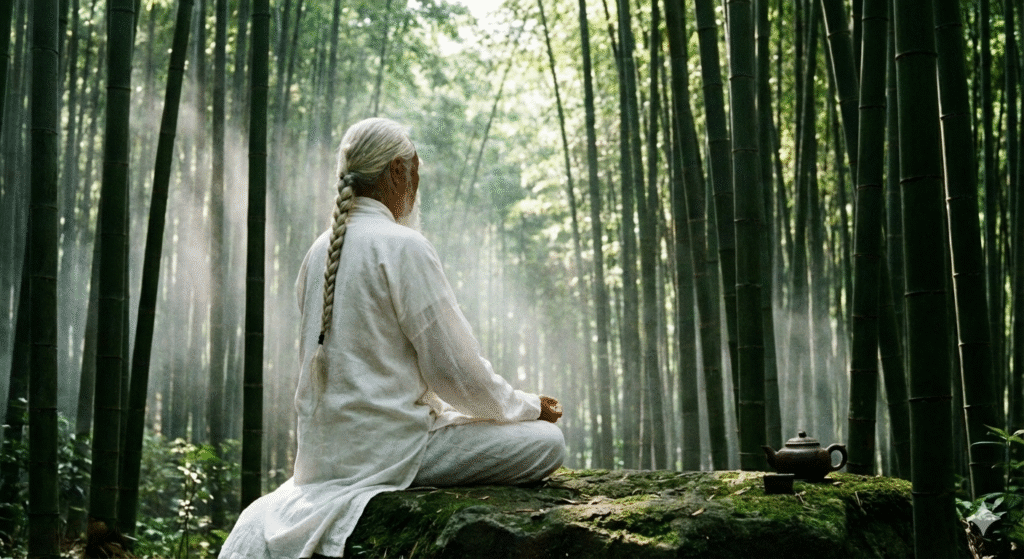
- Joy in the Ordinary: Ziran finds wonder in simplicity—a cup of tea, a mountain vista.
- Resilience Through Cycles: Yin-Yang teaches that storms pass; winter always turns to spring.
Final Classical Nudge:
- Tao Te Ching, Chapter 8:”The highest goodness is like water, nourishing all without contention.”
Visual Appendix
- Mind Map (as previously outlined).
- Suggested Art:
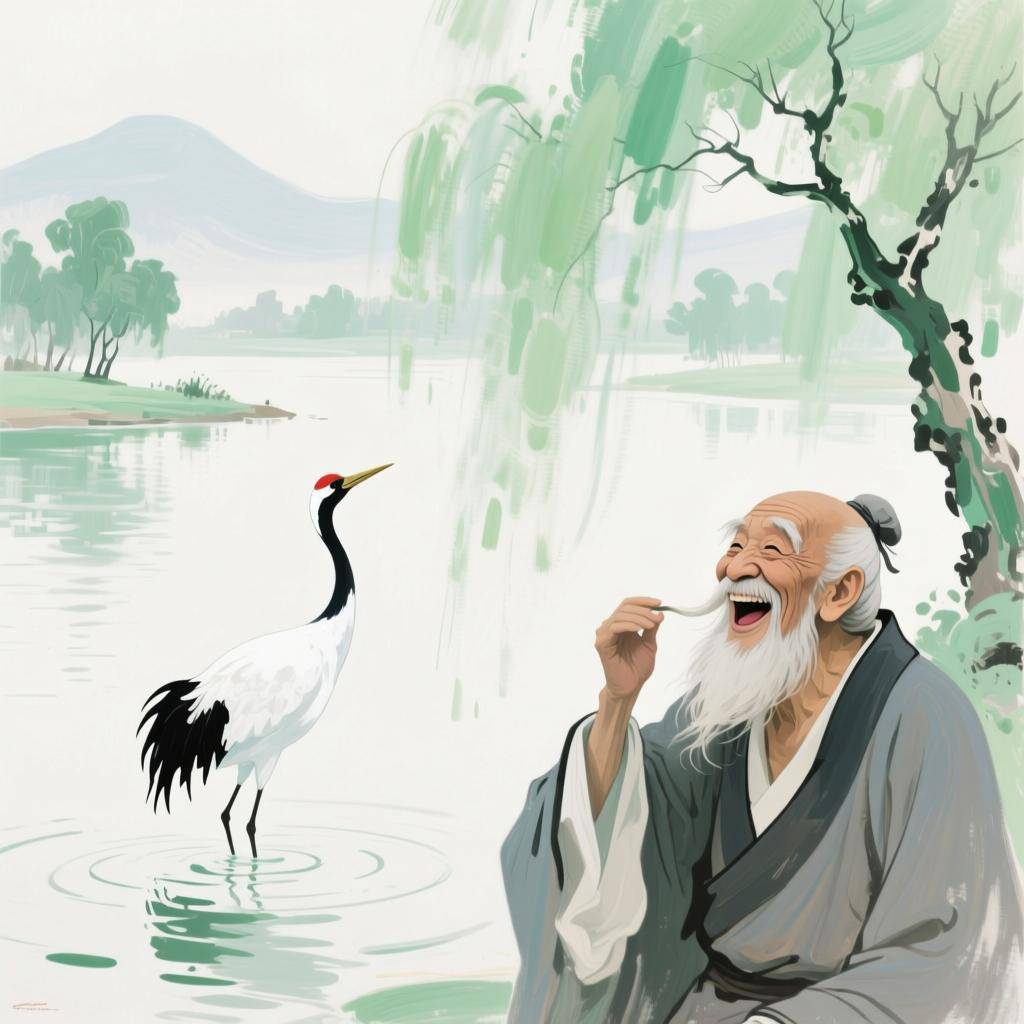
- Wu Wei: A Ming Dynasty ink painting of a hermit by a stream.
- Yin-Yang: The Taijitu symbol with Laozi’s face in the curves.
- Ziran: A rustic, unpolished jade (pu metaphor).
This expanded version weaves classical texts with modern relevance, offering both scholarly depth and actionable wisdom. Let me know if you’d like further refinements!